Our History
NOTE: For the best viewing and reading experience, please view this page on a fullscreen Chrome or Brave browser using a laptop or desktop computer.
Since 1962, NCOSE has been an advocate for human dignity, a voice for those who have suffered sexual abuse and exploitation, and a driver of personal and cultural change.
This experience has given us a unique, panoramic perspective enabling us to see that we cannot separate different forms of exploitation as we seek lasting solutions and that the work for human dignity is not and cannot be limited by partisanship or sectarianism of any kind.
The movement to end sexual exploitation looked much different in 1962 than it does today, but this core truth remains: NCOSE’s successes are a beacon of hope to all those who felt voiceless and powerless to confront the destructive impacts of sexual exploitation on their lives.
- Scroll Down to Continue
1960s: Operation Yorkville is born
1970s: Momentum Builds Under Morality in Media
-
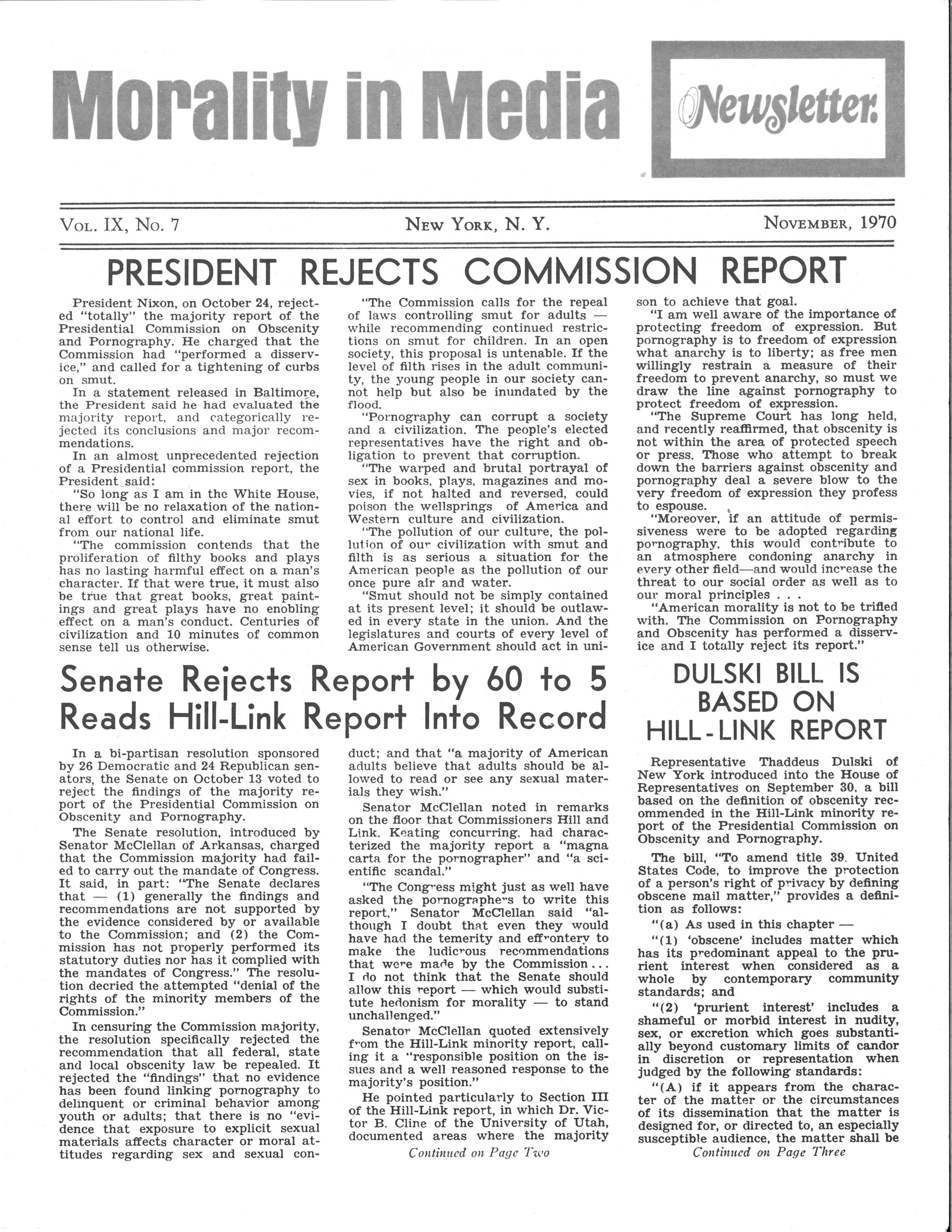
1970 - Presidential Commission Report
The Johnson Presidential Commission on Obscenity and Pornography issues its report that calls for the repeal of all local, state, and federal obscenity laws. The President and Senators from both parties reject the report, instead accepting the minority report submitted by MIM President Father Hill and Dr. Winfrey Link. [READ MORE]
-
1973 - U.S. Supreme Court Decisions
In a series of landmark decisions, the Court clarifies federal law and stands on the historical precedent that obscenity is not protected by the First Amendment. Using the Hill-Link Minority Report as a source, the Supreme Court cites it once in the text and three times in the footnotes of these decisions.
-
1976National Obscenity Law Center
A clearinghouse of information on obscenity law for the nation’s prosecutors and other interested attorneys. [LAW CENTER TODAY]
-
1977More Join The Movement
In Utah and New York, thousands of people gather to rally against pornography and massage parlors. Relentless activism by MIM and its supporters helps spur passage of state obscenity laws, laying the groundwork stronger obscenity law enforcement.
- Scroll Down to Continue
-
1981 - 39-City Town Meeting Tour
MIM leads a “Town Meeting Tour” to educate on the emerging “cableporn” problem. Father Hill is widely quoted saying, “Pornography is no longer just downtown, it’s downstairs.”
-
1983 - Meeting with President Ronald Reagan
Father Hill and national leaders meet with President Ronald Reagan to plead for aggressive enforcement of federal obscenity laws. Father Hill presents President Reagan a briefing book with detailed recommendations for action against pornographers across U.S. federal agencies.
-
1985 - Meese Commission Formed
U.S. Attorney General Edwin Meese III forms a commission to study the effects of pornography and ways to control it.
-
1986 - Final Report of the Meese Commission
The final report of the Attorney General’s Report on Pornography, popularly known as the Meese Report, is released. MIM releases a summary of the nearly 2,000-page report and calls on supporters to send letters appealing for enforcement of federal obscenity laws.
-
1986 - Pledge of Vigorous Obscenity Prosecution
At a news conference, U.S. Attorney General Edwin Meese III pledges to enforce federal obscenity laws and lays out a 7-point program. following the receipt of more than 150,000 letters from concerned citizens.
-
1987 - White Ribbon against Pornography Week
Norma Norris, of Butler, Pennsylvania, organizes the first White Ribbon against Pornography (WRAP) Week together with MIM.
- Scroll Down to Continue
1980s: Turning the Tide
1990s: The Battle Goes Online
2000s: Online Exploitation Explodes
While the advent of Web 2.0—characterized by high-speed Internet, improved data storage technology, and the rise of websites where virtual communities can post user-generated content—ushers in a dynamic new age of global communication, the technology also gives pornographers and other sexual exploiters direct access to children via home Internet access. Many of the children coming of age in this decade are exposed to voluminous amounts of pornography. Morality in Media launches the website, obscenitycrimes.org, hosts press conferences, and submits amicus briefs in key court cases.
Watch this presentation from Lisa A. Thompson, Vice President of Research for NCOSE, as she dives into the history of the major social media platforms through the early 2000s and how they have impacted our culture – specifically young people. This presentation was given at the 2018 Coalition to End Sexual Exploitation Global Summit

- Scroll Down to Continue
2010s: New Era as National Center on Sexual Exploitation
In 2010, attorney Patrick A. Trueman, former Chief of the Child Exploitation and Obscenity Section, Criminal Division at the U. S. Department of Justice, becomes President and CEO of MIM.
With the addition of Dawn Hawkins as Executive Director in 2011, the two begin to shift and expand the work of the organization.
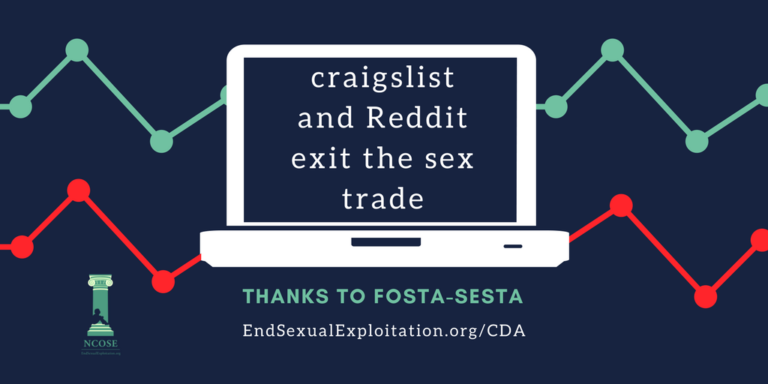
In 2015, Morality in Media changes its name to the National Center on Sexual Exploitation (NCOSE), recognizing that pornography’s harms are inextricably linked to issues such as sexual violence, child sexual abuse, prostitution, sex trafficking, and more. NCOSE’s efforts in the realm of public and corporate policy secure giant leaps forward in moving mainstream corporations to stop profiting from or facilitating sexual exploitation.
- Scroll Down to Continue
2010s: New Era as National Center on Sexual Exploitation
- Scroll Down to Continue
Looking Ahead
Already in the early 2020s, NCOSE is advancing the cause of human dignity with greater momentum than ever before.
NCOSE Law Center
Filing trailblazing lawsuits against profiteers of sexual exploitation, bringing justice to survivors and systemic changes to corporations
Research Institute
Harnessing the power of data to create a world free from sexual abuse and exploitation
Corporate Advocacy
Naming and changing mainstream corporations facilitating or profiting from sexual harm through grassroots advocacy and direct consultation
Training & Education
Equipping leaders and the public with the resources to create a world free from sexual exploitation
Legislative Policy
Advocating for good legislative solutions and stopping bad ones while educating national governments, Congress, and state legislatures